Key Monastery, Spiti Valley
Key Monastery (also spelt Kye or Ki, and often called Key Gompa) is the largest monastery in the Spiti Valley. It sits on a cone-shaped hill at about 4,166 m (13,668 ft), roughly 12 to 14 km from Kaza on the road to Kibber. There’s no entry ticket, it’s open to visitors through the day, and an unhurried visit takes an hour or two.
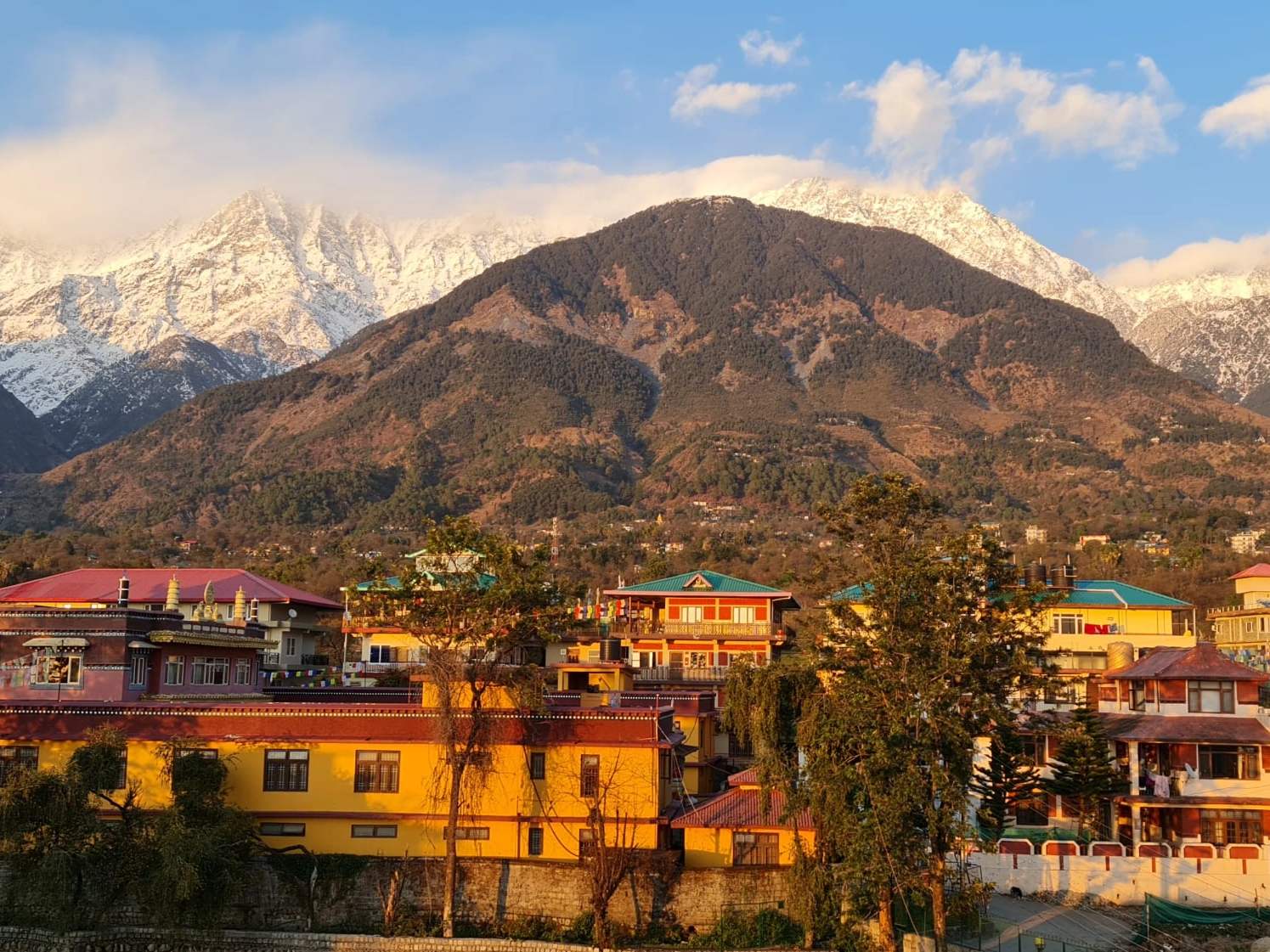
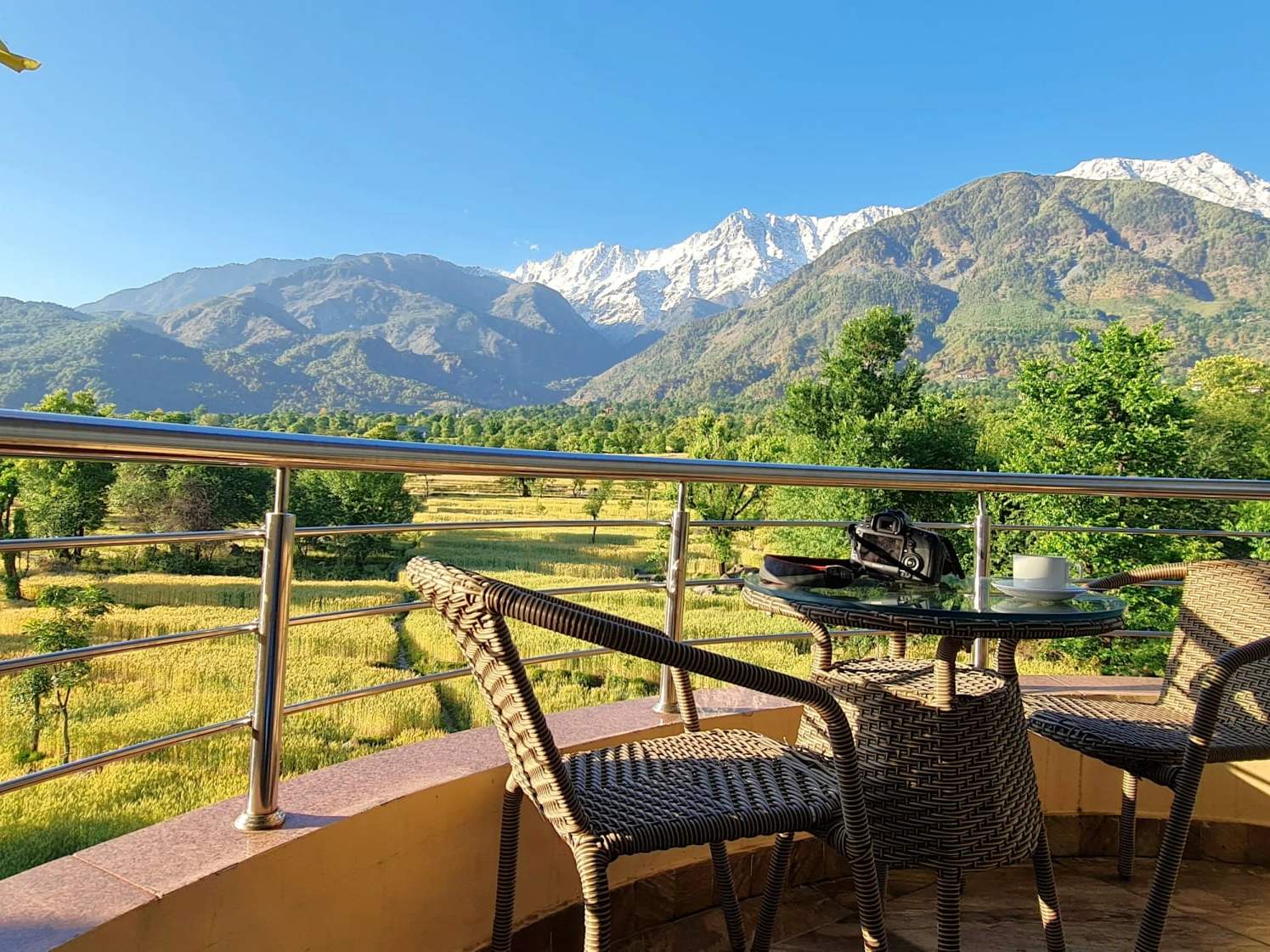
Our Hotel Spiti Villa Himalayan Brothers is in Key village, just over a kilometre below the gompa. From the Mud Rooms you can see it from bed. So this is the guide we’d give a friend before they walked up.
Key Monastery at a glance
| Visiting | Details |
|---|---|
| Altitude | About 4,166 m (13,668 ft) |
| From Kaza | 12 to 14 km, 30 to 40 minutes by road |
| Open | Through the day. Mornings are best |
| Entry | Free. Donations welcome |
| Time needed | 1 to 2 hours |
| Season | May to October is easiest |
| Nearest stay | Key village, right below the monastery |
A thousand years on a hill
Tradition says Key was founded in the 11th century by Dromtön, a disciple of the great teacher Atisha, though historians think that story may belong to an older monastery nearby at Rangrik. Either way, it has had a rough millennium. It was attacked by the Mongols in the 17th century, around the time it became a Gelug monastery. It was sacked again in the early 1800s during the wars between Ladakh and Kullu, and twice in 1841, by the Dogra army during the Dogra-Tibetan war and then by the Sikhs. A fire in the 1840s did more damage, and so did the 1975 earthquake, after which it was repaired with help from the Archaeological Survey of India and the state’s Public Works Department.
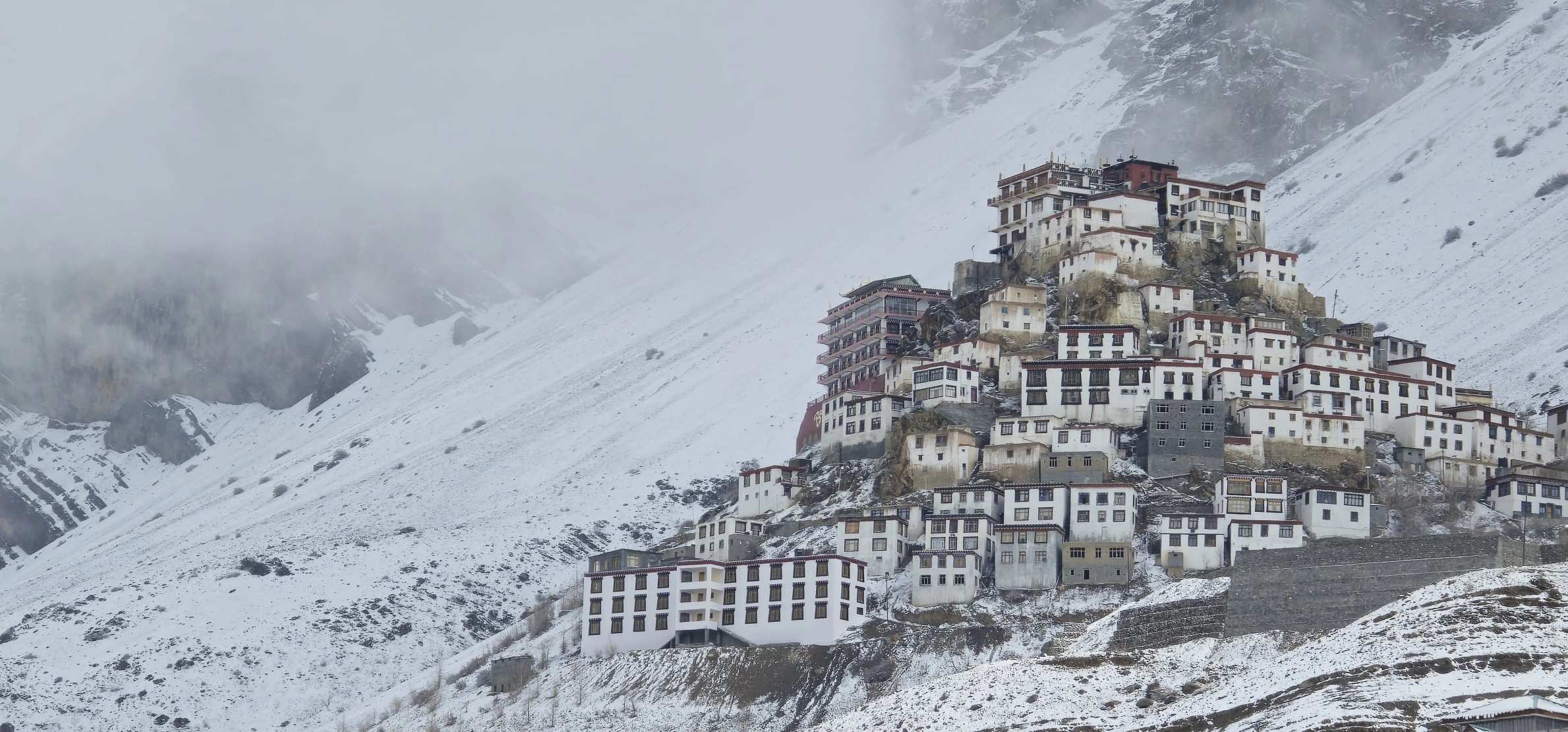
That history is why it looks the way it does: rooms, chapels and corridors added and rebuilt over centuries, stacked up the hill like a fort. In August 2000 the Dalai Lama gave the Kalachakra initiation here and inaugurated a new prayer hall to mark the monastery’s thousand years.
What to see inside
Inside, the gompa is a warren of low doorways, steep wooden stairs and small chapels. Look out for:
- The prayer halls, with old murals, thangkas and statues.
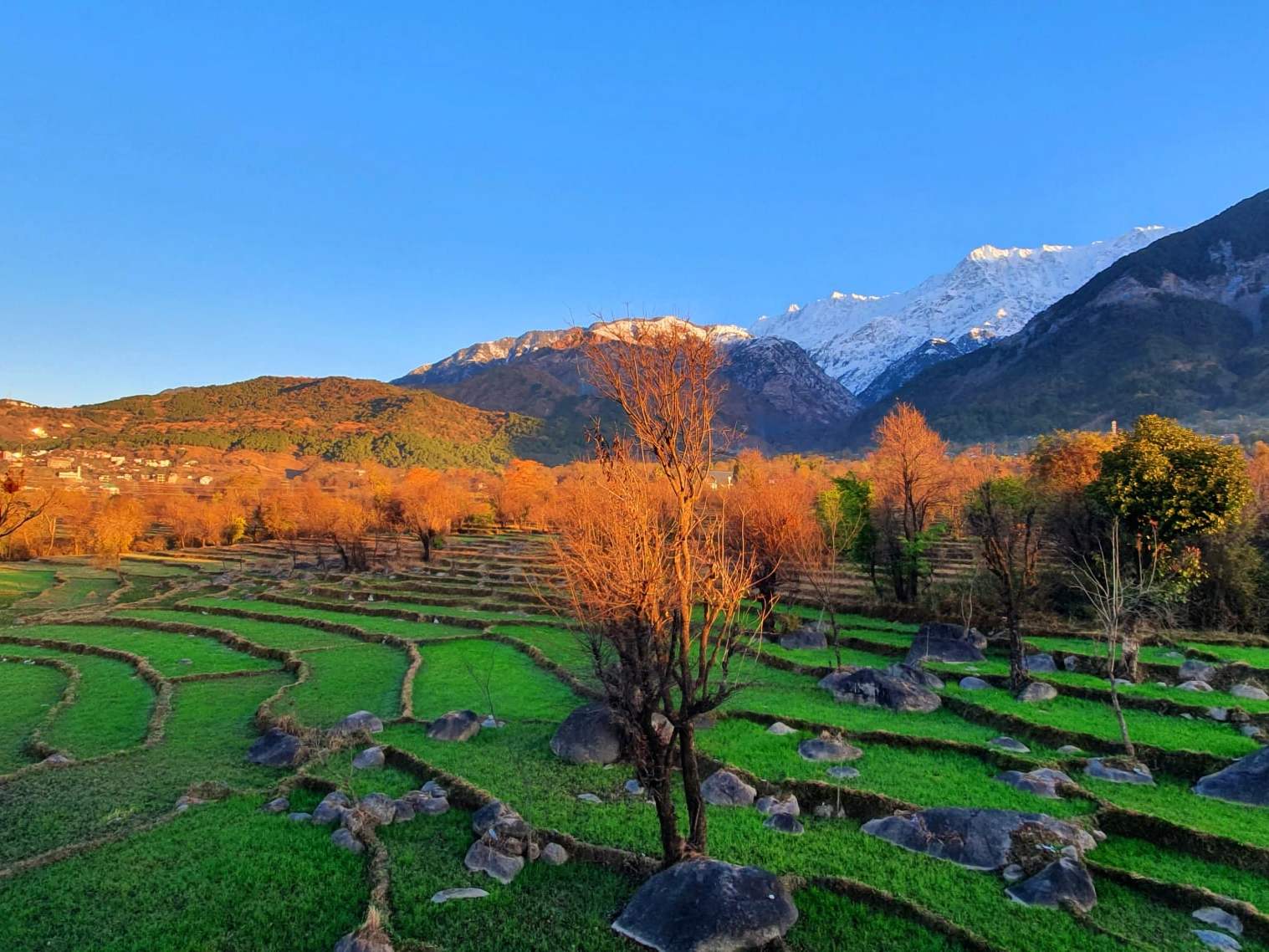
- The rooftop, for a view straight down the Spiti Valley, with the river braiding across its wide stony bed.
- The old kitchen, where visitors are sometimes offered tea.
- Morning prayers. If you’re there early, you can usually sit quietly at the back.
Key is home to a community of monks, many of them young novices studying here, and often one of them will show you round. A few manners go a long way:
- Walk clockwise around chapels, stupas and prayer wheels.
- Ask before taking photos indoors. Some halls don’t allow it.
- Dress as you would for a temple, and take off your shoes where you’re asked to.
- Leave a donation if you’ve been given tea or a tour.
Before you leave, walk a little way down the road and look back up. From below, the gompa really does look like a fortress built on a cone of rock.
Getting to Spiti
Most people reach Spiti one of two ways. From Manali, through the Atal Tunnel and over Kunzum La, Kaza is roughly 200 km away, a long day’s drive on a road that’s open from about June to mid-October. From Shimla, through Kinnaur, it’s around 400 to 450 km, best split over two days, and that road stays open for most of the year. Coming in from the Shimla side and leaving by Manali gives your body more time to get used to the height. Our Spiti Valley itinerary lays out a full week.
How to reach Key Monastery from Kaza
- By taxi. The easiest way. Kaza’s taxi stand runs fixed-rate local trips, and Key is usually combined with Kibber and Chicham in a half-day.
- By car or motorbike. A short, steady climb from Kaza on the road to Kibber. Park below the monastery and walk up the last stretch.
- By bus. There’s usually one bus a day from Kaza towards Kibber in the late afternoon, passing Key, and it comes back early the next morning. Times change, so check at the Kaza bus stand.
- On foot. If you’re staying in Key village, it’s a short, steep walk up to the gompa.
When to visit
- May to October is the main season. The road from Manali over Kunzum La is usually open from about June to mid-October. The road from Shimla through Kinnaur stays open for most of the year.
- Early morning is the best time of day: soft light, morning prayers and hardly anyone else around.
- The festival. Key holds its masked Chham dances once a year in summer, on a date set by the Tibetan calendar, often in July. Ask locally for that year’s date.
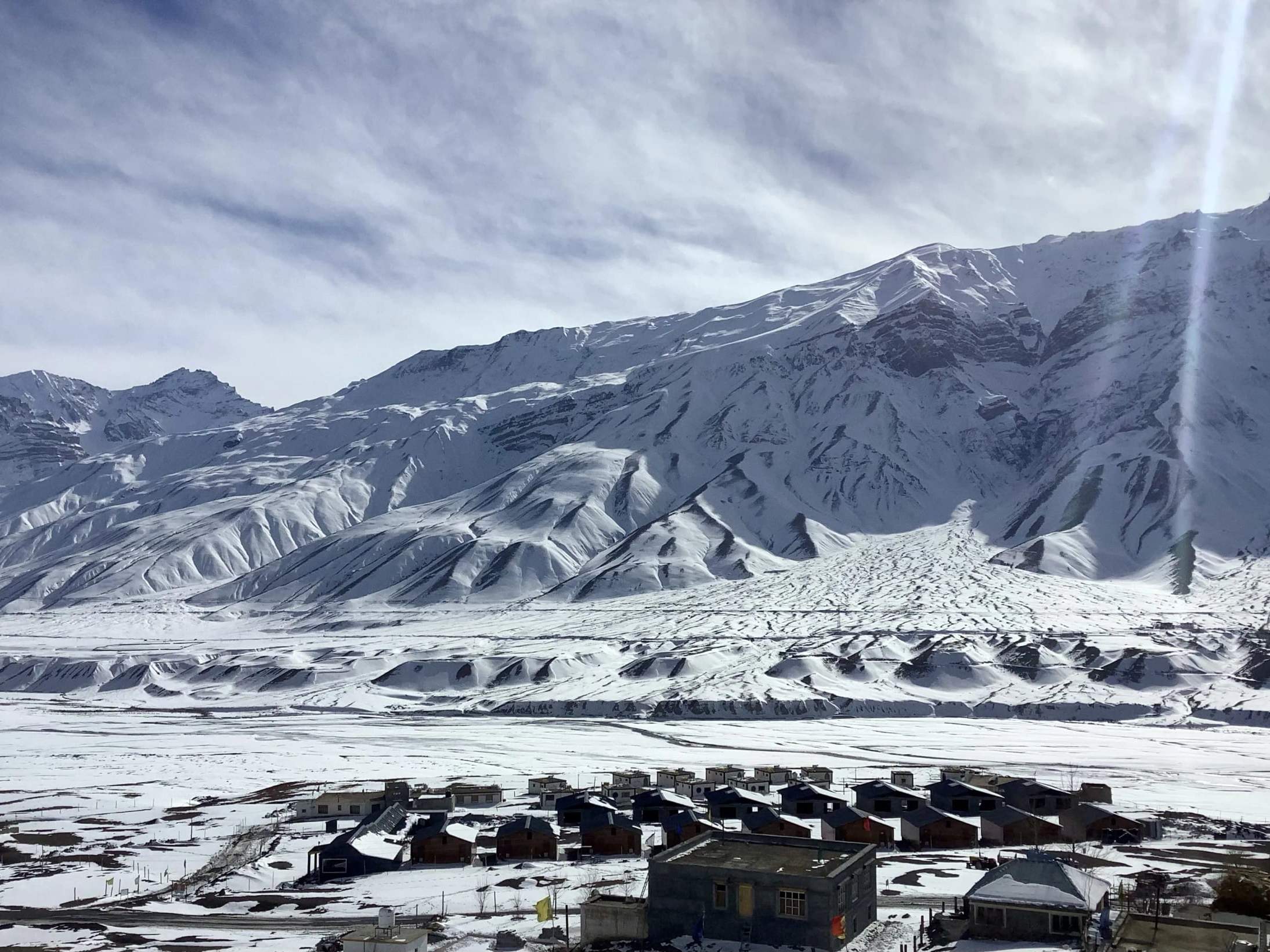
- Winter, roughly November to March. Spiti can only be reached through Shimla and Kinnaur, nights drop far below freezing, and the road up to Key depends on the snow. The monastery is magical under snow (the photo at the top of this page is ours), but Hotel Spiti Villa closes for the winter. Stay in Kaza, where a few homestays keep going, and treat every road beyond Kaza as a day-by-day decision.
Key, Kibber and Chicham Bridge in one morning
Key sits on the road to two more of Spiti’s best-known stops, and most people see all three together.
- Kibber, 6 to 8 km beyond Key at more than 4,200 m, is one of the highest villages you can drive to in Spiti. It’s also the gateway to the Kibber Wildlife Sanctuary, where people come in winter to look for snow leopards.
- Chicham Bridge, a little way past Kibber, crosses the gorge of the Samba Lamba stream, about 1,000 ft (300 m) deep, at around 4,145 m. Since it opened in 2017 it has been called Asia’s highest suspension bridge. Whether that’s strictly true is debated, but standing in the middle of it, you won’t care.
A typical half-day: Key Monastery after breakfast, Kibber for a cup of tea, Chicham Bridge for photos, and back for lunch. If you’re staying in Key, you start the loop half an hour ahead of everyone driving up from Kaza.
Should you stay in Key village or in Kaza?
Most travellers base themselves in Kaza, Spiti’s main town, at about 3,650 m. It has the most hotels and cafés, the petrol pump, the valley’s ATMs (don’t count on them, carry cash anyway) and the most reliable phone signal. Key village is quieter and closer to the things you came to see.
Stay in Key if you want quiet nights, sunrise over the gompa, an early start for Kibber and Chicham, and darker skies for the stars.
Stay in Kaza if you want shops, fuel, banking and a strong signal on hand, or if you’re coming in winter.
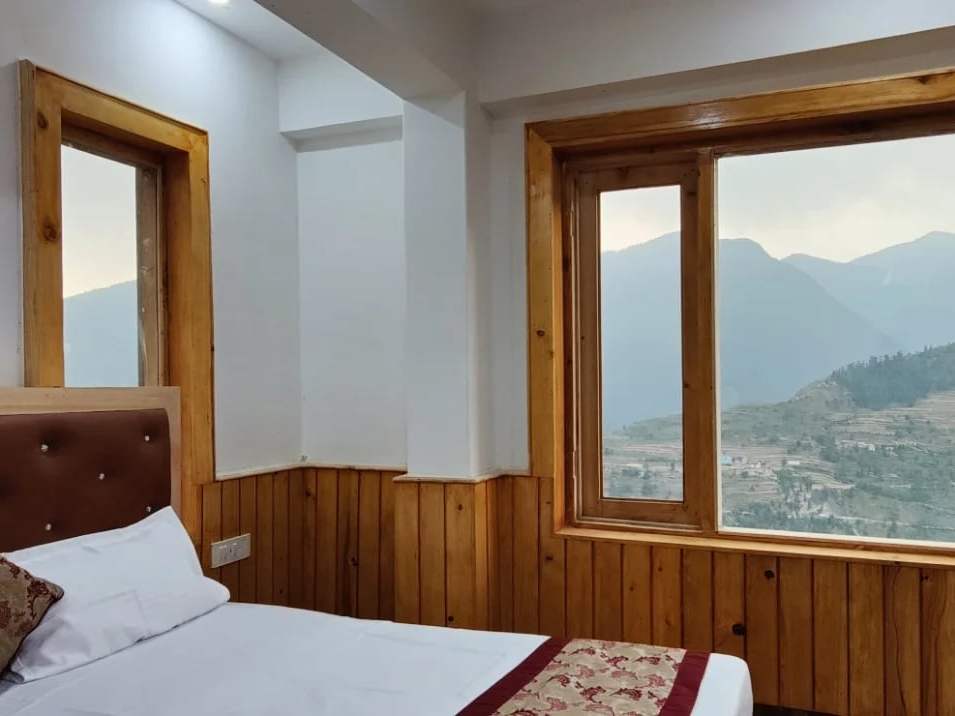
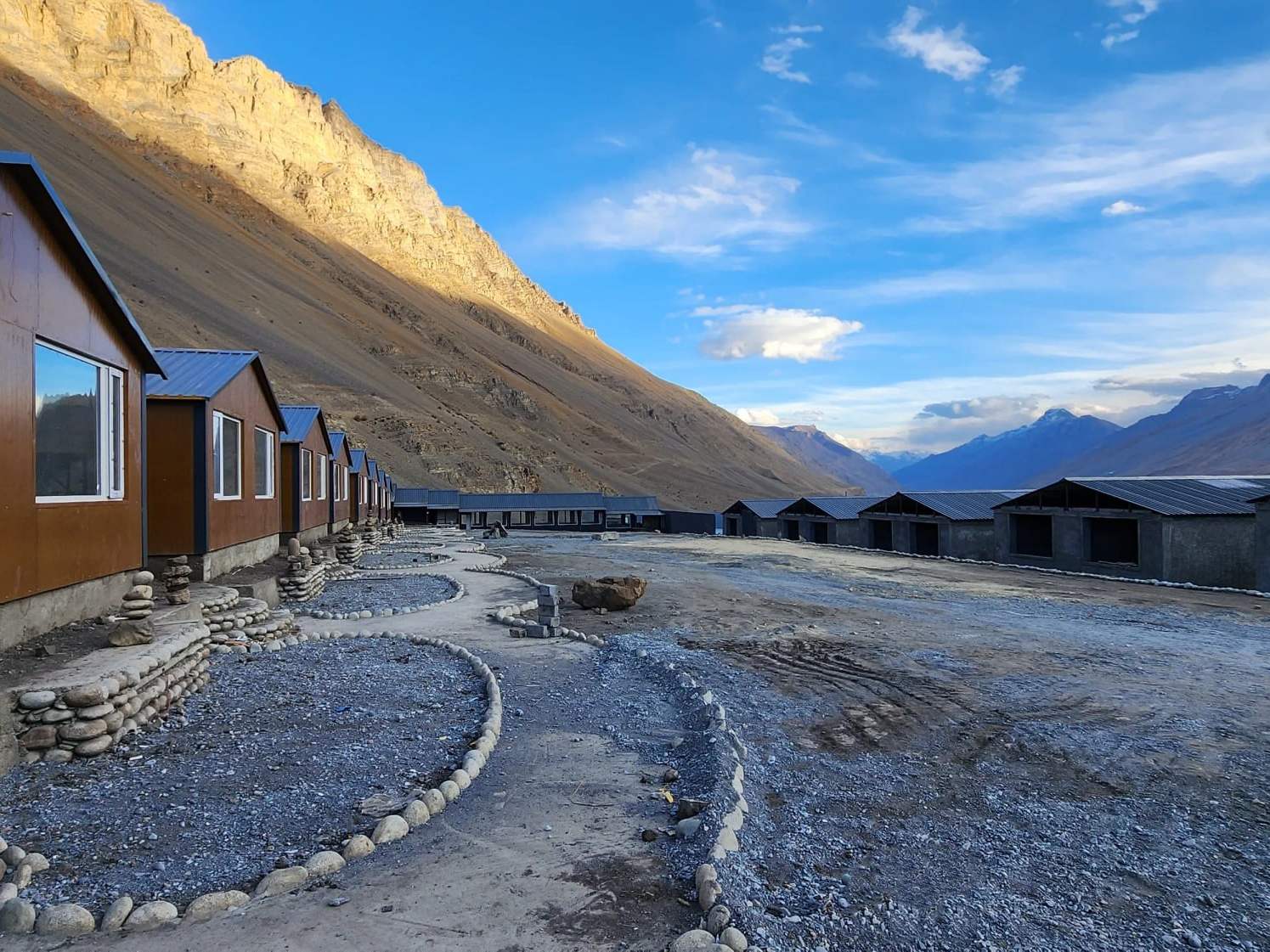
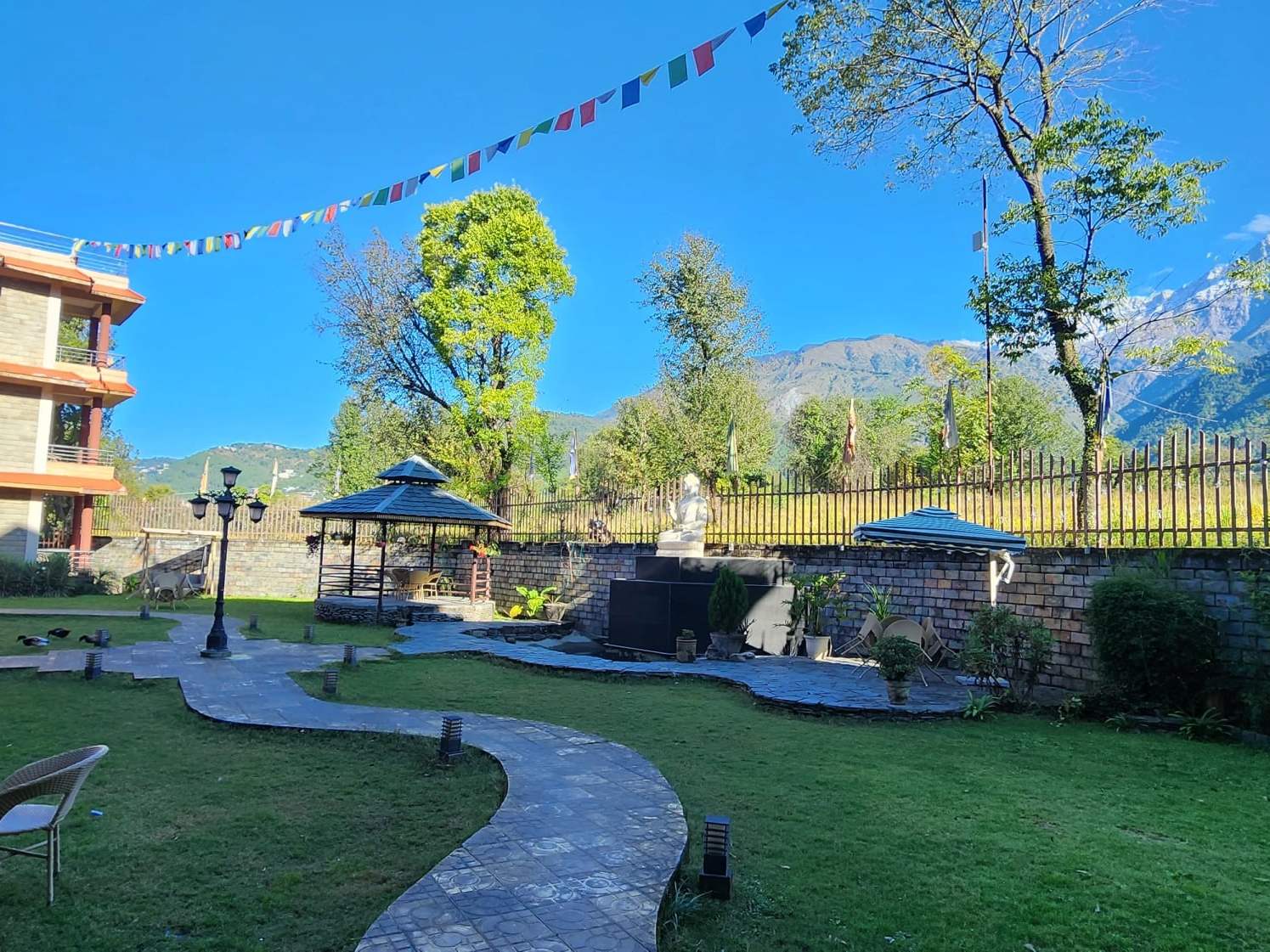
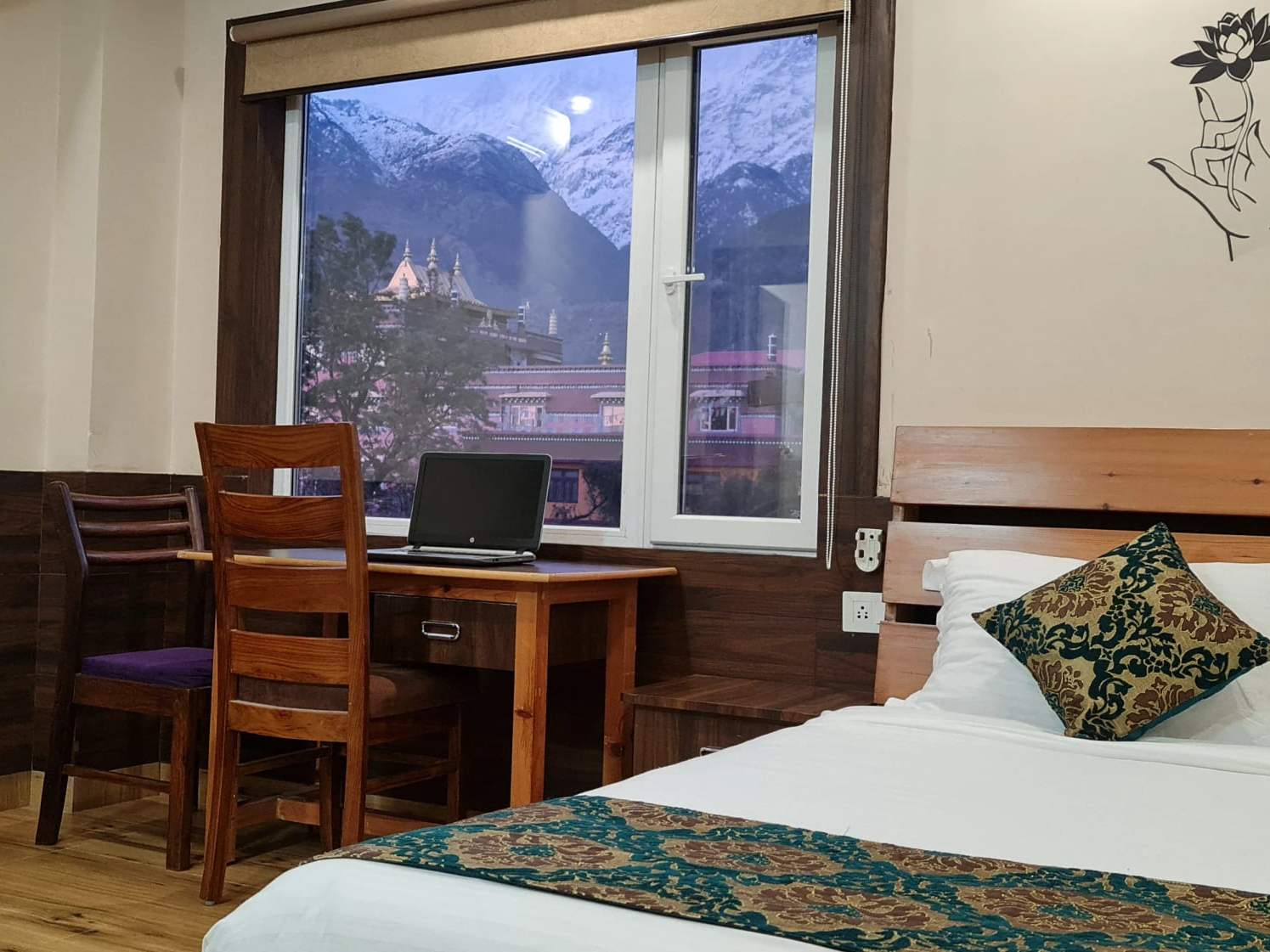
Our Hotel Spiti Villa Himalayan Brothers is on Kibber Village Road in Key, just over a kilometre from the monastery. It’s a row of cottages with two kinds of room: Cozy Queen Mountain View rooms (220 sq ft, with big windows onto the mountains) and Premium Mud Rooms with a private porch over the Spiti River, a sky-view bathroom and the gompa in view from the bed. Hot and cold water run at set hours. There’s a glass-walled restaurant serving dishes made with local ingredients, bonfire and barbeque evenings, and bicycles to hire. You can book online, or call +91 75600 39999. We’re open through the season and closed in winter.
What to bring
- Layers. Even in summer, mornings and evenings at 4,000 m are cold, and the wind on the monastery roof is sharp.
- Sun protection. The sun is fierce at this height. Bring sunglasses, sunscreen and a hat.
- Water. Carry a bottle. You’ll need to drink more than you’re used to.
- Small notes. For donations, tea and snacks in Kibber. Card machines and phone signal get unreliable once you leave Kaza.
- Shoes you can slip off. You’ll take them off and put them on again several times inside the gompa.
Altitude: take it slow
At over 4,100 m, Key will leave you short of breath on its stairs. If you’ve come over Kunzum La from Manali, or straight up from Kinnaur, give yourself a day or two in Spiti before you climb around the gompa and Kibber. Walk slowly, drink plenty of water and skip alcohol for the first couple of nights. If a headache, nausea or dizziness gets worse instead of better, go lower and see a doctor. Our Spiti survival guide has more on acclimatising, and on butter tea.
For routes, seasons and more places around Kaza, see our Spiti Valley travel guide.
Quick answers
How far is Key Monastery from Kaza?
About 12 to 14 km by road, or 30 to 40 minutes by car. Kibber is another 6 to 8 km beyond it.
What is the altitude of Key Monastery?
About 4,166 m (13,668 ft) above sea level.
Is there an entry fee for Key Monastery?
No, entry is free. A donation is welcome, especially if a monk shows you round or you're offered tea.
What are the timings of Key Monastery?
It's open to visitors through the day, from the morning prayers until late afternoon. Early morning is the best time to go.
Can you visit Key Monastery in winter?
Often, if the road from Kaza is clear of snow, but check on the day. In winter Spiti is only reachable through Shimla and Kinnaur, and many places close, including our Spiti Villa, so plan to stay in Kaza.
Where can I stay near Key Monastery?
In Key village, just below it. Hotel Spiti Villa Himalayan Brothers is just over a kilometre from the gompa on Kibber Village Road and open through the season, closing in winter. Kaza, 12 to 14 km away, has the most choice and stays partly open in winter.
Can I see Key Monastery, Kibber and Chicham Bridge in one day?
Easily. They're on the same road, and the round trip from Kaza fits into half a day.